

Forests and Teams: What do they share?
Forests operate as a single organism, sharing information and nutrients, which increases the forest’s resilience. What can your team learn from the forest?
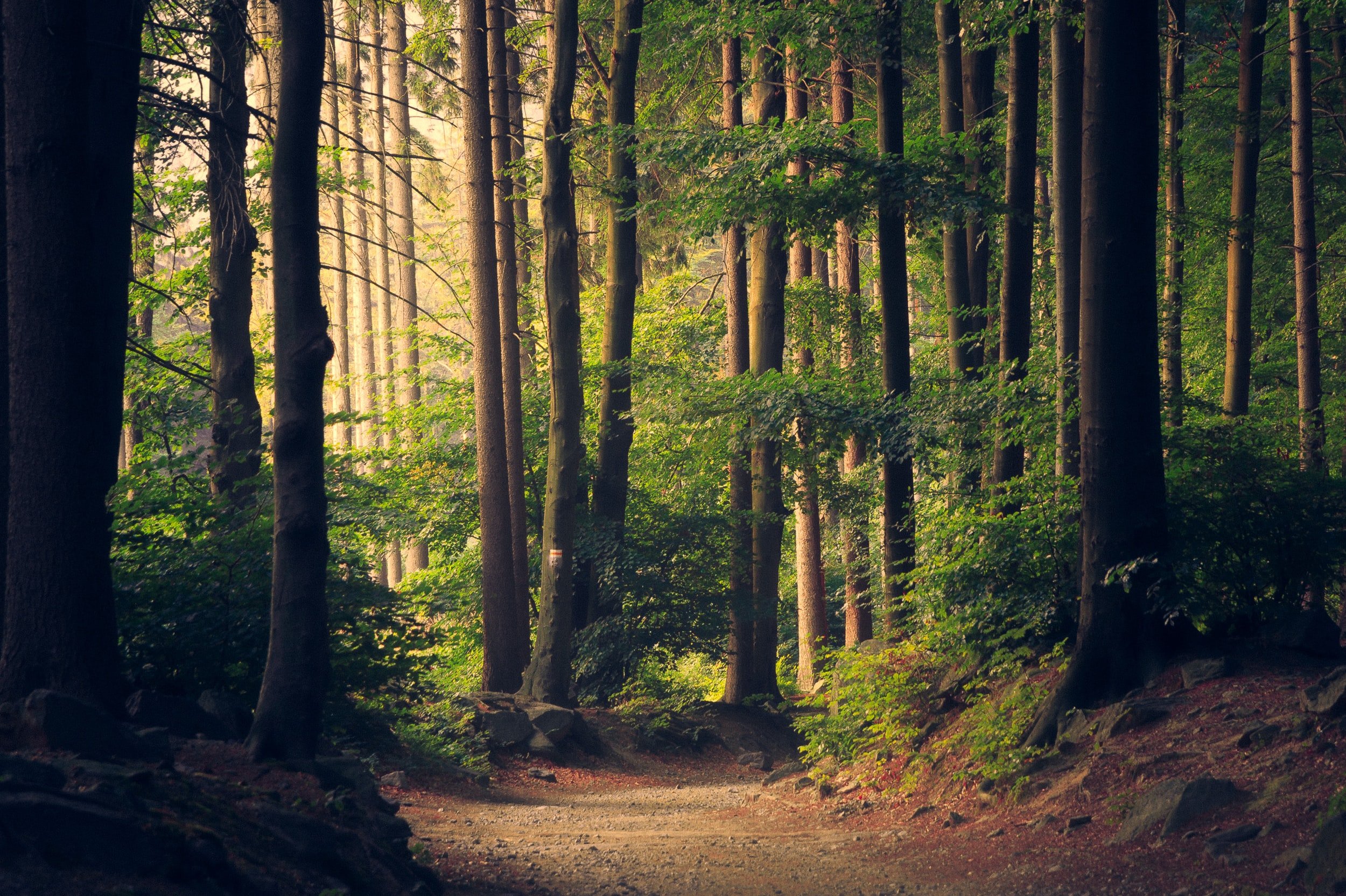
Why should you take your coaching conversations into nature? Why would you offer nature-based leadership coaching to your teams?
With Nature-Based Leadership Coaching, the coaching conversation takes place in nature. Either the client is in nature and the coach is not, the coach and client are both in nature together, or the coach and client are in nature in different places talking on the phone. A client might go into nature to reflect and then have a coaching call around that experience afterward.
Nature is part of the coaching process. It allows your team members to experience coaching in a new way, away from a screen, outside of the four walls. Away from colleagues. And in a place where our brains can be free from the constant to do list.
We put our assumptions on nature — how it works, what it is, what it means. An example is that some assume nature is about kill or be killed, organisms fighting for finite resources. What we are learning though is that isn’t really what’s happening. We need to look deeper to see what is really going on. I’ve thought of trees as ‘fighting’ for the sunlight; trying to beat each other out of limited nutrients. I found Fantastic Fungi, a documentary about the amazing underground communication between fungi and trees, to be helpful in my understanding of what is really going on underneath the surface in the forest.
What we are starting to understand is that trees share nutrients, they communicate with one another, they thrive off one another, and the forest operates as a single organism. There is symbiosis that we humans can’t see unless we zoom in and study it. Suzanne Simard’s TED Talk explains this. She notes that the more diverse the forest, the more resilient it is. And when information and nutrients are shared between organisms, the more resilient the forest becomes.
Can you look at your team as nourishing you? Could you see your team working together because together you succeed rather than competing for limited resources? By looking at nature in a new light, your team may be able to see themselves and their teammates in a new light, perhaps as a single organism working to build its own resilience.

Build Trusting Teams
Build Trusting Teams, a Simon Sinek, Inc. event.
Choice nuggets include:
You can’t make anyone trust you. You can only behave in a way that allows people to choose to trust you.
Trust is a feeling we get. And it’s an active choice that we have to make.
All we can do is show up in a way that encourages people to trust us.
A week or so ago, I attended a webinar, Build Trusting Teams, a Simon Sinek, Inc. event. (There are more of these coming up.)
Here are some choice nuggets:
It is hard to build trust when waters are rough. It’s better to do it when waters are calm so that when we need it, we have it.
You can’t make anyone trust you. You can only behave in a way that allows people to choose to trust you.
Trust is a feeling we get. And it’s an active choice that we have to make.
All we can do is show up in a way that encourages people to trust us.
Trust needs to be built, maintained and repaired. To repair it, must show consistency to desire to repair it. If you know you’ve broken trust, humility and willingness to say that you know you broke trust and here’s how I did it (if you know) and you want to fix it.
Feedback
Get in the habit of having feedback conversations. Then people don’t fear it as much.
How to deliver and accept feedback. FBI. Feeling. Behavior. Impact. (This is similar to SBI: situation, behavior, impact that I learned about in my sustainability masters program.) What is the feeling, specific behavior, impact of the behavior.
Ask better questions
Monitor the types of questions we are asking ourselves. Because our brains will come up with an answer. So are we asking the right questions. Ask more empowering questions. Ask more generative or building questions. “how can I improve ….” What ways can I implement new habits to get better at ….”
The quality of our lives is correlated to the quality of questions we ask ourselves.
Culture
Live the culture. Culture = values + behavior
Strength of culture is the degree to which values are lived. Articulate values as verbs or action phrases.