
Forests and Teams: What do they share?
Forests operate as a single organism, sharing information and nutrients, which increases the forest’s resilience. What can your team learn from the forest?
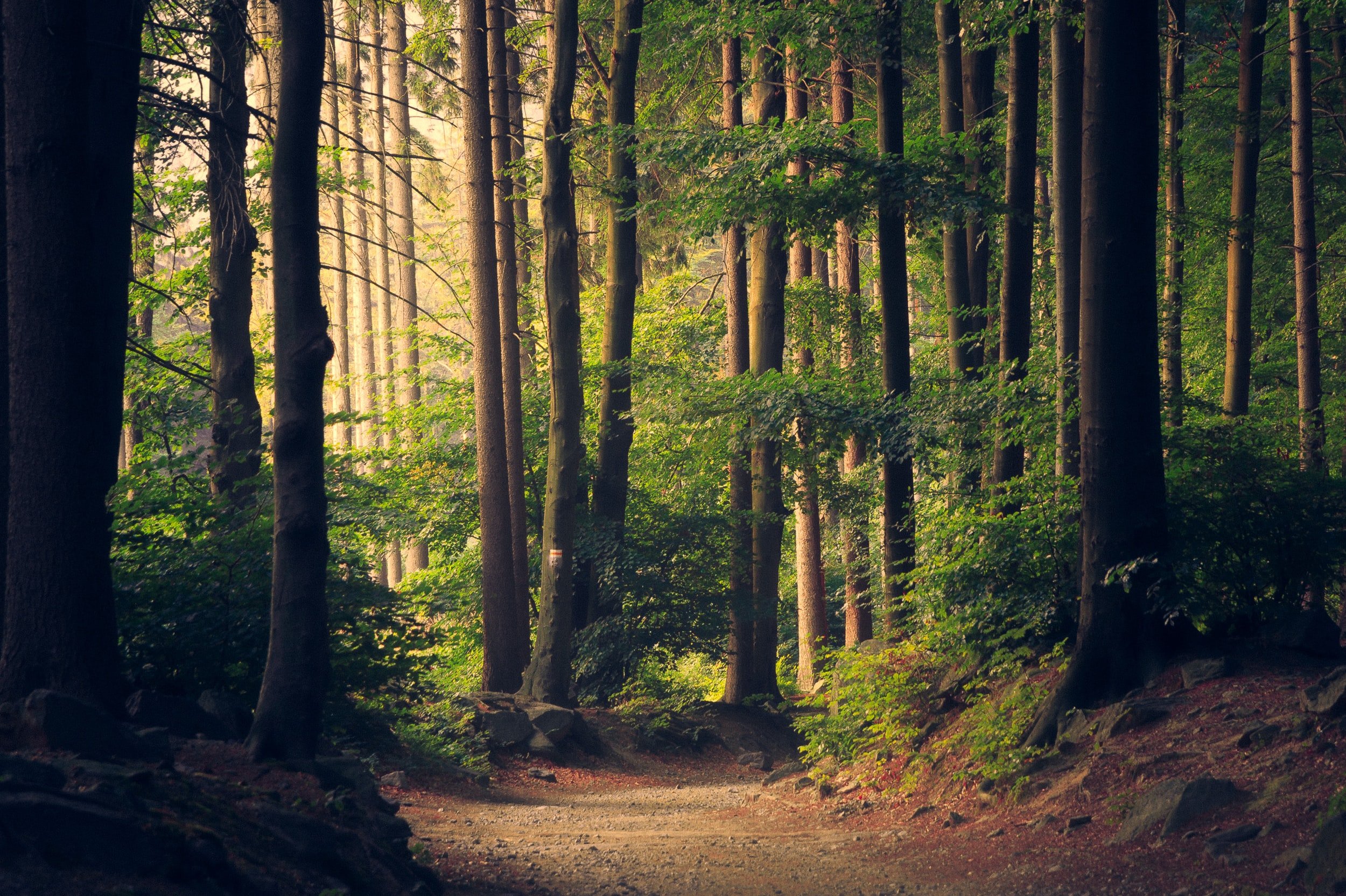
Why should you take your coaching conversations into nature? Why would you offer nature-based leadership coaching to your teams?
With Nature-Based Leadership Coaching, the coaching conversation takes place in nature. Either the client is in nature and the coach is not, the coach and client are both in nature together, or the coach and client are in nature in different places talking on the phone. A client might go into nature to reflect and then have a coaching call around that experience afterward.
Nature is part of the coaching process. It allows your team members to experience coaching in a new way, away from a screen, outside of the four walls. Away from colleagues. And in a place where our brains can be free from the constant to do list.
We put our assumptions on nature — how it works, what it is, what it means. An example is that some assume nature is about kill or be killed, organisms fighting for finite resources. What we are learning though is that isn’t really what’s happening. We need to look deeper to see what is really going on. I’ve thought of trees as ‘fighting’ for the sunlight; trying to beat each other out of limited nutrients. I found Fantastic Fungi, a documentary about the amazing underground communication between fungi and trees, to be helpful in my understanding of what is really going on underneath the surface in the forest.
What we are starting to understand is that trees share nutrients, they communicate with one another, they thrive off one another, and the forest operates as a single organism. There is symbiosis that we humans can’t see unless we zoom in and study it. Suzanne Simard’s TED Talk explains this. She notes that the more diverse the forest, the more resilient it is. And when information and nutrients are shared between organisms, the more resilient the forest becomes.
Can you look at your team as nourishing you? Could you see your team working together because together you succeed rather than competing for limited resources? By looking at nature in a new light, your team may be able to see themselves and their teammates in a new light, perhaps as a single organism working to build its own resilience.
Gear to get you outdoors
You want to get out hiking but you’re not sure what to bring. This short and simple post will get you started and feeling ready to hit the trails!
Get out on that hike!
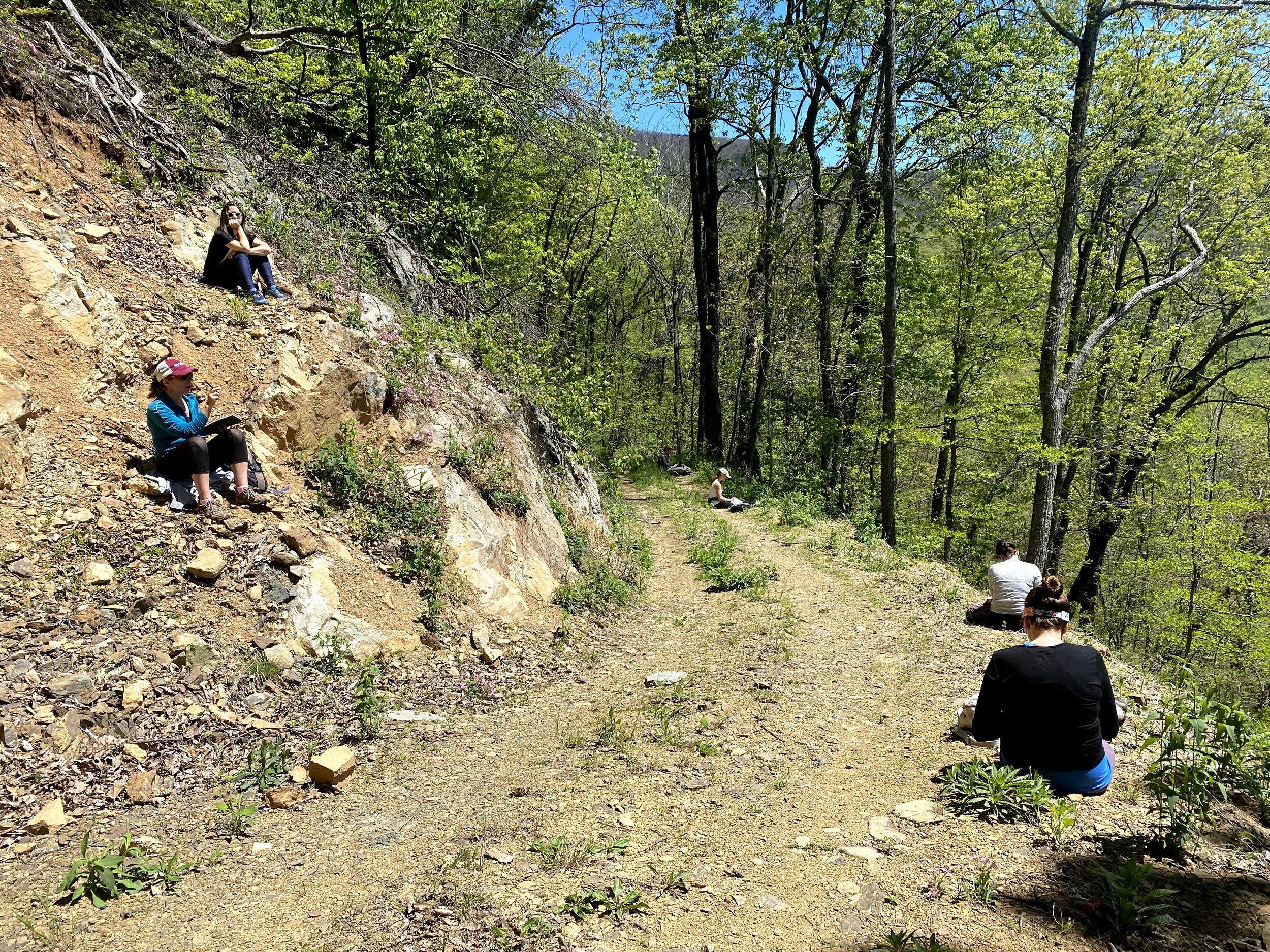
You want to get to a view like this. You want to spend quality time with friends. You want to get the health benefits of being in nature. But you ask: What should I bring on the hike? If this sounds like you, read on.
I get asked these questions a lot so this post is one in a series of posts about gear. And let me tell you, I love outdoor gear! That said, I also admit to wearing hiking pants that are 20 years old, which also speaks to the durability of some outdoor gear. One thing that can seem intimidating is the lingo. I’ve added definitions to help with that.
The basics: water, shoes, the right clothes, map or app.
Water. Hydration packs are the way to go for anything over an hour (if it’s cool outside) or anytime in the heat.
Wait. Hydration pack?
Basically, either a hip back or small backpack that has a bladder that holds water and a hose with nozzle to drink it. The bladder goes into the hydration pack and the hose will come around your shoulder (or waist). Here is a good article on the kinds of packs for different outdoor activities.
Shoes.
When I started hiking, there were just hiking boots. They were big and bulky. Hiking shoe options have since expanded to light hikers, trail runners, boots. Which one you choose depends on the kind of hiking you’ll be doing. If you’re carrying weight, like a heavy backpack, you may want more support. If your trails are rocky, you may want thicker soles. That said, a friend of mine hikes on rocky trails wearing minimalist or barefoot shoes. The bottom line here is to wear something comfortable that has the level of support you prefer. And be sure to break them in before doing any major hikes. Wear them around the house and on short walks to be sure they don’t hurt and won’t create blisters.
Clothing.
Some essential pieces are: windbreaker and/or lightweight rain jacket that doubles as windbreaker; base layers (lightweight, midweight and/or heavy weight depending on your locale and time of year); ear warmers (my ears always get cold!); good socks for the season.
In summer, it’s pretty simple because where I am, it’s hot. A tank top and running shorts should do. You may consider wearing mid calf socks if you will be walking through grasses or brush. I also prefer a lightweight sun shirt and hat. The sun shirt has SPF protection so I don’t get sunburned. In the spring where I live, a rain jacket is pretty essential. I also have rain pants for hiking any distance in the rain. In spring, fall and winter, layers are essential. Base layers for winter (central Virginia winters are not extreme so I go with light to mid-weight layers), a windbreaker, lightweight fleece, ear warmers, gloves, gaiter (has lots of options) and warm socks. You may need more depending on where you are.
Map or app.
I use the app Trailforks because I also mountain bike and it works for both hiking and mountain biking. I also have paper maps of the areas I hike in. It lets me highlight a given trail and see the elevation gain, distance and topography. The bottom line is that you should know where you are going. Many trails are well marked so you don’t get lost. Some are not. If you are new to hiking, consider getting comfortable hiking the former.
The rest.
Of course there are many other items you should consider carrying. Here is what I have in my pack for a short to medium length hike: small first aid kit, Kula cloth, pocket knife, snacks (like a bar, crackers, nuts).
I hope you are able to get out on a hike soon!
Traveling across America and appreciating home
My family and I took a road trip. Like many, I was desperate to go somewhere. I’d been to Colorado several times but not with my children. It would be a great experience for them. So we packed our minivan and headed west with 6 bikes, two kids and a dog.
My family and I took a road trip recently. Like many, I was desperate to go somewhere. I’d been to Colorado several times but not with my children. It would be a great experience for them, I thought. So we packed our minivan and headed west with 6 bikes, two kids and a dog. We took photos through the window when we didn’t have time to stop completely. Other times, we extended our three day drive so that we could be at the site, read the signs and learn of the history.
I fully acknowledge the privilege I have to do this, to take time away from work, to take an actual vacation. I hope that those who need a vacation are able to take one, whether at home or away, to refresh your mind and spirit. If you can, spend some time in Nature even if you can’t get away from work long enough to call it a true vacation. Nature is healing in many ways.
We drove through the midwest and carried on through Kansas, getting off the interstate and traveling nearly solo through the vast farms. I kept a sharp eye out for pronghorn antelope and was able to spot a few. They are the fastest land animal in North America but they aren’t jumpers like deer so they tend to go under fences. We also stopped at Prairie Dog State Park and saw a prairie dog colony. According to the info sign, there were at one time 5 billion prairie dogs in the US. They are critical to the grasslands habitat as many species rely on prairie dogs for shelter and food, including jackrabbits, toads, rattlesnakes, hawks, coyotes and ferrets, according to WWF.
We entered Colorado, Denver, and then the mountains. The air was cool and the bugs were few. A welcome change from Virginia. We rode bikes, hiked, visited some local establishments and met up with friends. The kids were impressed by the height of the mountains.
We visited bike parks with incredible vistas on the lifts. We headed to New Mexico and explored the Angel Fire area. Horseback riding was a huge hit and took us up to a meadow with the most beautiful wild flowers!
We saw deserts, mountains, wetlands. We saw blue skies, thunderstorms and gray skies. We saw cities and small towns and capitols. We saw petroleum refineries, wind turbines, nuclear power plants and solar farms. We saw dry creek beds and gushing rivers. We visited the UFO Watchtower and Great Sand Dunes National Park.
We watched Fourth of July fireworks from the road in Oklahoma. We visited Central High School in Little Rock, a National Historic Site, and learned more about the tremendous Civil Rights events that took place there and the courage of the Little Rock Nine students who risked their lives to effect change. According to the NPS website, “In 1957, Little Rock Central High School was the epicenter of confrontation and a catalyst for change as the fundamental test for the United States to enforce African American civil rights following Brown v. Board of Education.” “Arkansas Governor Orval E. Faubus directly questioned the sanctity of the federal court system and the authority of the United States Supreme Court's desegregation ruling while nine African American high school students sought an education at the all-white Little Rock Central High School.
The controversy in Little Rock was the first fundamental test of the United States resolve to enforce African-American civil rights in the face of massive southern defiance during the period following the Brown v. Board of Education decisions. When President Dwight D. Eisenhower was compelled by white mob violence to use federal troops to ensure the rights of African American children to attend the previously all-white school, he became the first president since the post-Civil War Reconstruction period to use federal troops in support of African American civil rights.”
Looking forward to home
We tried new things and we confirmed our love for home. As much as it is nice to leave, it is nice to return home. I am grateful for that and aware that there are many who cannot return home, now or ever. Perhaps you can create a new home. I wish you strength and love in that journey.
Wellness Retreat in the Mountains
With everyone fully vaccinated, we headed to the mountains for a much-needed wellness retreat. We expressed gratitude, moved through Qoya with our amazing instructor Laura Farmer, and I led the group through Nature Roaming™.
Getting ready to Nature Roam™! I’m explaining the three parts (Roam (silently, with intention in mind), Connect (journaling on what you saw—connecting the dots; and connecting with each other through sharing), Grow (what to do after this event; how to continue learning).
Did I mention that it’s spring in Virginia! The flowers are in bloom!
Lots of journaling and reflecting happening along the trail
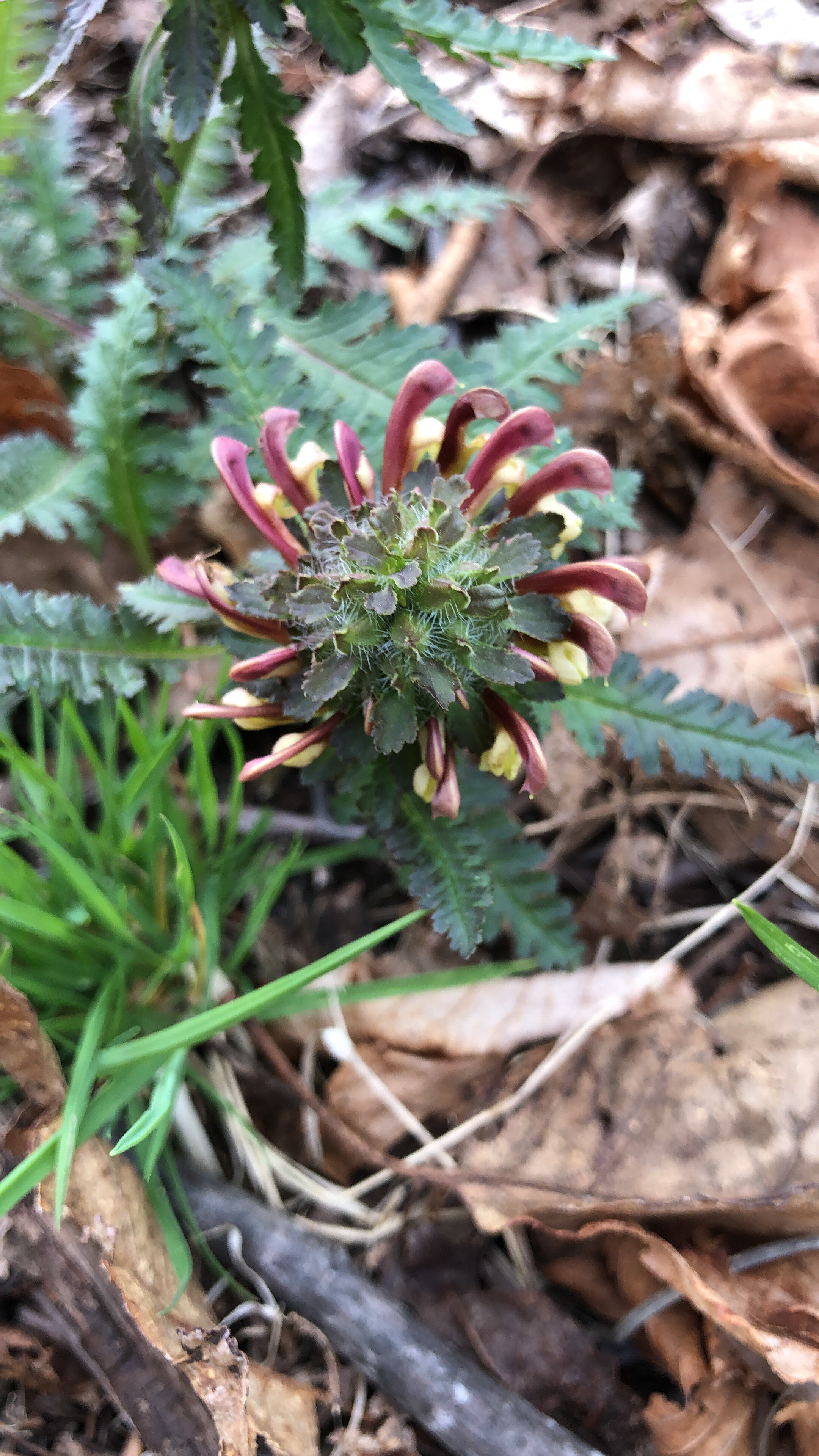
Canadian Wood Betony
We captured the moment after a glorious hike and reflection. (And one of us spotted a black bear!)
Mindset about winter & tips on winter hiking
Changing your mindset can have big impacts in your life. Winter is just one example. Instead of dreading winter (and thus not enjoying fall to the fullest), I appreciate the opportunities that winter brings, including the landscape laid bare, reduced crowds, a bug-free hike, the smell of the crisp air.
When I was younger, I abhorred winter. It was dark and dull to me. I wasn’t born skiing so this statement probably sounds surprising to those who were. Skiing just wasn’t an option for me then. I would get depressed and would impatiently wait for spring. Once I realized that it’s not just about gear and clothing, it’s also about mindset, I was able to enjoy winter.
Changing your mindset can have big impacts in your life. Winter is just one example. Instead of dreading winter (and thus not enjoying fall to the fullest), I appreciate the opportunities that winter brings, including the landscape laid bare, reduced crowds, a bug-free hike, the smell of the crisp air. Group hikes with friends, solo hikes for solitude, and vistas uncovered also help me see winter as something to cherish rather than something to ‘wait out’.
How can you change your mindset about winter (if you're like me and don’t have snow sports all around!)? What story are you telling about winter? About going outside in winter? How would telling a different story change the way you think about winter?
If you would like to read tips on winter hiking, check out this article from REI. My number one tip is layers, layers, layers! Layers are critical so that you can add or remove as you get warm (hiking up the hill or mountain) and chilled (at the overlook, on the hike downhill). I always wear a base layer and a windproof jacket (depending on temperature, you may need a parka) as two essential layers. I add more depending on the temperature, which doesn’t get too low in central Virginia.